
A weak force?
Advertising has long been called a weak force. Andrew Ehrenberg, whose work underpins much of modern marketing science, argued that it doesn't persuade people to buy the way a salesperson does. It nudges and reinforces to keeps a brand in the running.
He had a point. At any moment, only a small share of buyers are actually in the market. A few of them will see an ad and act on it but most aren’t ready to buy yet.
But "doesn't persuade today" isn't the same as "doesn't persuade". That gap is where most of advertising's value lives.
Every ad makes a deposit
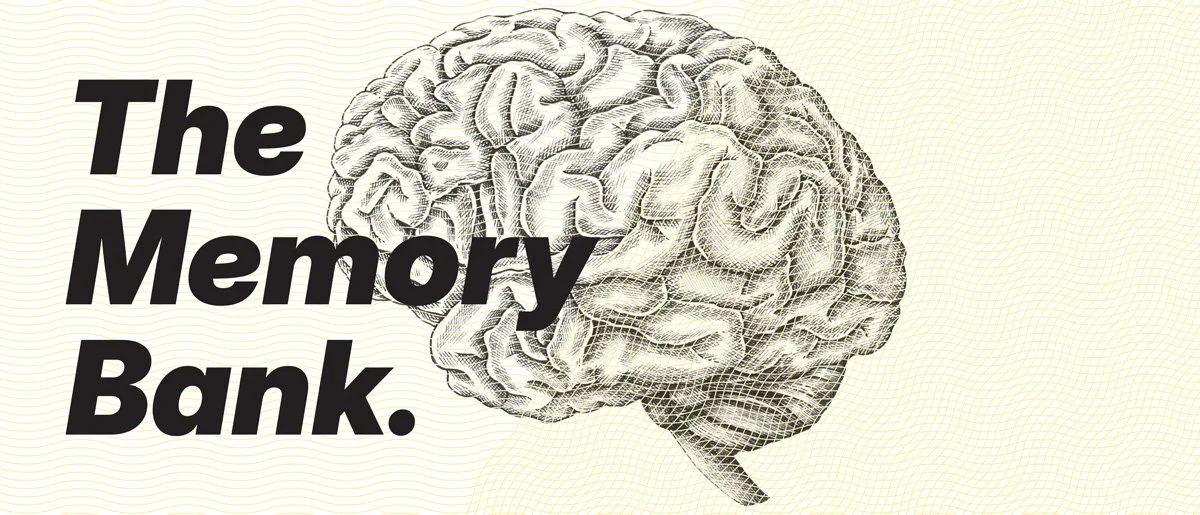
Think of it as a memory bank. Every time someone sees your advertising, a small deposit is made. A memory, filed away for later.
When the moment comes, that memory does the persuading. At the shelf. In the search bar. When someone asks a friend for a recommendation. The ad isn't there anymore, the memory is.
And we trust our own memories. The brain filed them because it judged them worth keeping. That makes them feel familiar, and familiar feels safe. Research on processing fluency and mere exposure has shown this for decades: the more easily something comes to mind, the more credible and comfortable it feels.
So, the persuasion isn't missing. It's delayed and built in.
Where to make the deposits
Marketing science gives us a clear process for this. Identify the buying moments when people need what you sell. Build distinctive brand assets that make you instantly recognisable. Then use creative to link the two, so your brand comes to mind when the moment arrives.
We use that process because the evidence behind it is strong.
But it describes the destination, not the journey. Big brands are linked to more buying moments and have stronger assets. That tells you what successful brands look like. It doesn't tell you how they got there. Treat it as a checklist and it's easy to think the job is done once the boxes are ticked.
The real job sits underneath. A deposit only counts if the brain accepts it.

The map and the territory
Psychiatrist and author Iain McGilchrist describes two ways the brain attends to the world. One is narrow and targeted. It sees parts, separate and fixed, taken out of context. Something closer to a map than the world itself. The other is open and broad. It sees the whole, where everything is connected, context is everything and things are alive.
The marketing science checklist is the map. It's useful as it tells you where you're going. But memories aren't made on the map. They're made in the territory, where an ad meets a real person with a real life, and their brain decides in an instant whether this is worth keeping.
Most of the time, it isn't. That's the problem every brand is up against.
The bank charges fees
The brain is a ruthless editor. It forgets most of what we show it. Even the memories it keeps fade over time.
So the memory bank doesn't pay interest. It charges fees. Stop depositing and the balance drains. Slowly at first, so it's easy to miss. Then it shows up in sales, months after the budget was cut.
That's why two things matter more than anything on the checklist. Creativity opens the account. It's what makes the brain stop, notice and decide a memory is worth keeping. Consistency keeps it topped up. The same brand, the same cues, showing up again and again, so every new deposit builds on the last rather than starting from zero.
Rigour and imagination
Scientist Nirosha Murugan put it simply: "Science needs both rigor and imagination."
So does marketing. Rigour decides where to make the deposits. Imagination gets them accepted. One without the other is a map with nowhere to go, or a great idea that nobody remembers.
That's why we're called ScienceFiction.
Want to know how your brand's balance is looking? Start with B.A.N.G., our free brand diagnostic.